The Tier 1 Strategy That Builds Number Sense
Hey everybody, it's Cheri Dotterer
from Tier One Interventions Today.
Jonily is gonna uncover some new material.
She didn't even tell me what
this time, so take it away,
Jonily and let's get started.
Mission accomplished.
Mission accomplished.
We are gonna unpack exactly what
that means in our first segment
here of our live session today.
That's what I'm using my
assessment for my midterm.
And then I design my next few seasons to
dig to mastery so we get much more depth,
which is going to ensure that my kids
that have already mastered, get the deeper
versions of it and my kids that haven't
mastered get the mastery of the minimum.
So in the next part of the year,
this is how it's structured.
Season three is one of my favorites
and I already have it planned.
Season three is my absolute favorite.
Even more favorite than season one.
First 15 days, guys, this
is the an i I can't wait.
'cause after my midterm, next
week we have our two week winter
break, and then we come back and
it's the beginning of January and
season three is all of January.
And there is a name, a special name for
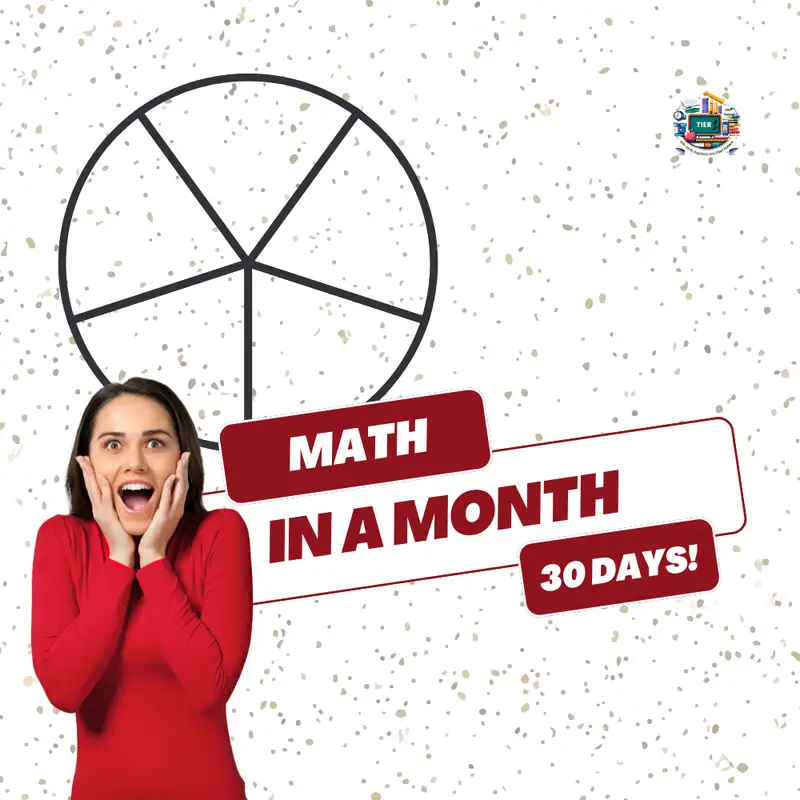
it, and it's called Math in a Month.
And I have a season three created for
every grade level math in a month.
So January.
So what do we have left?
I wanna do this proportionally.
January, February, March, April, may.
Okay, there's five months.
Good.
We're in fifths again.
Oh, this is working out nicely.
I didn't even plan it this way.
I'm so good.
I'm so smart you guys.
Okay, so I'm gonna do fifths again.
So I'm gonna share the middle.
Now, when I share the middle, this
time over here, I realized I needed to
share the middle a little bit bigger.
See, this is number sense.
This is why we use this strategy
to improve number sense.
So I need to share the middle over here.
This time a little bit bigger
than I shared it over here.
But see, you learn by doing
that over and over again.
That's what interactions over time means.
It means, that's why we
do all of the stuff here.
And then we do most of
the stuff again here.
And then we do the same stuff here and the
same stuff here, and the same stuff here.
That's why we do the same things over
and over, because we develop more of a
mastery each time we're exposed to it.
And I just gave that model here
with, oh, I did that and I needed
to share the middle a little bigger.
So I'm gonna do that here.
And then that's one of the parts.
This has to be two parts,
and this has to be two parts.
See how they're more equally spaced?
You learn from experience.
We don't give that to kids.
Regular, typical, traditional textbooks
do not build the complexity as you go.
They go onto a new topic,
they're so bad.
But what I love about textbooks, because
I, I have a textbook that we've adopted
a textbook curriculum and there's a lot
of great things in it, and I pull from it
all the time because I don't wanna have
to create, I'm, I'm teaching algebra one.
I don't wanna have to create like, every
single quadratic equation I give to kids.
Like I don't have the mental capacity
for that, that would exhaust me.
I don't wanna have to
create all those problems.
So that's one of the ways that I use
my textbook and it's a lifesaver.
So if I know I need quadratics that,
um, are gonna have, like, so if
I'm, I'm planning my second semester
now, so this is one of the things
that I've used my textbook for.
I need all of the quadratics that have
no solution, no roots, meaning the
para is not gonna cross the X axis.
I want all of those equation examples.
I ain't smart enough to create them.
Okay?
But the textbook is, so then I go to
my textbook and I pull all of those
examples and I want some of them in
each of these first three fifths here.
See, that's how I use my textbook.
But I've defined essentials because some
of my essentials, and this is essential
for second grade, I've taught this to
my second graders in my district two.
And then I, I have really
hounded this with algebra one
radicals and square roots.
This is a major essential that needs
to happen at every grade level.
Radicals, square roots,
they're the same thing.
A radical is a square root.
A square root is a radical.
So I'm telling you, one of the essentials
that I have drilled with my Algebra one
kids, which is radicals, using radicals,
simplifying radicals, actually is what I
use most of all to improve number sense
with my high school kids that have never
like gotten a good sense of number yet.
The other thing that I use are
diamond problems, but I talked
about that on another episode.
Radicals and square roots.
The reason that these are so essential
is because there are certain numbers
in the radical that I can take out.
Those are called perfect squares.
There are certain perfect square numbers
that I want kids to know by memory, just
like single digit multiplication facts.
There are also certain square
numbers that are not perfect
squares, but they are square numbers.
Kids that don't have number sense
are not able to view radicals and
square roots in the same kids.
They don't.
They don't have the same
experiences and exposures.
So with that number sense, lacking,
they can't take radicals at the
Algebra one level as far as they can.
They potentially could have, but if I
start square roots in second grade, now I
don't just teach a unit on square roots.
So you all listening to this
live know what I'm about to say?
The way that I expose square roots in
grade two is we do the pizza problem.
A pizza company makes square pizzas.
What are all of the possible
numbers of unit pieces?
One by one unit pieces.
That could be in a pizza, that would be a
square pizza that that company could sell.
Oh, we could sell a pizza with 16 pieces.
That's a four by four.
16 is a perfect square.
Guess what kids, there's this thing in
math I, this is why I said to my second
graders, there's this thing in math.
Don't tell.
Don't tell your principal
I'm teaching you this.
I should not be teaching you this.
Second graders love that.
I can't do this with my high school kids.
They're like, shut up, but second
graders, eat this stuff up.
I'll lean in and I'll be like, I'm
gonna show you something mathematically
right now, but don't tell anybody I
taught you this, and I don't even want
you to remember this, but there is
a thing in math called square root.
It's a weird symbol.
You wanna see it?
And they're like, yeah, okay.
I mean, you can't do that
with high school kids,
but with my second graders, they're
like, yeah, we won't tell anyone.
And then I also have to say, now remember,
there are secrets that people are
asking you to keep that are dangerous.
And that's not what
I'm talking about here.
This is in danger.
You know what I mean?
You have to kind of put that
into, so why can't you do
that with your high schoolers?
Why can't you tell 'em
there's a secret about math?
Why Mike?
The novel model even more radical.
Well, and this is funny, Cheri,
because actually Cheri, in
my math class, I do do that.
What I meant to say was you don't get
the same reaction from high school
students that you do from second graders.
It's funny, Cheri, I do that with
my kids by this point in the year.
It doesn't even phase them anymore.
At first they were like, oh my God.
And now they're like,
that's Miss Z for you.
So Cheri, great point.
Great point.
You're awesome.
It's, that's funny.
That's funny.
So anyway, at the second grade I said,
I'm gonna show you, I'm gonna show you.
And I'm talking like, you know, so
I show them the square root symbol
and I say, the square, what do you
think the square root to 16 is?
And they're like, eight.
I'm like, it's not, what
do, what else do you think?
What?
So we have this whole tell me about, you
know, we're relating it to square pizzas.
So then I show them, well wait
a minute, we had that square
pizza that had 16 pieces.
What stage number was that?
What were the dimensions?
And they're like, oh, it was stage four.
It's got dimensions four by four.
'cause my, my.
Second graders know dimensions of
rectangles and squares, and they
know stage number and quick dot
and growing patterns, and we've
done that in the first 15 days.
So now they're like, but wait a minute.
The stage number is four
and it's a four by four.
I'm like, then that's exactly
what the square root of 16 is.
The square root of 16 is four, and
what that means is in our pizza
problem, you have 16 pieces of pizza.
What are the dimensions?
What is the stage number?
The square root says root.
The square root means find the
solution for the dimensions
of a pizza that has 16 pieces.
That's what a root means.
A root means, it's kind of
like the root word in English.
Language arts, engli
English, language arts.
Okay, so the root, the square root
is what is the root of the square?
I have a square that has an
area or array number of 16.
The root is four, the square root is four.
The radical 16, the simplified
version of radical 16 is four.
And I tell kids that second grade.
Then I'm like, let's try another one.
Lemme try another one.
They're like, yeah, okay.
So then I'm like square root of 150.
I'm like, perfect.
Let's draw this pizza.
Go.
Then I'll give them graph paper and
some of 'em will start putting like
four pieces of graph paper together,
because they're gonna try to, they're
gonna draw 50 by 50, and I let
them do not steal their struggle.
You need to let them use tape
and glue and put all these pieces
together, and then you'll have like
two kids over there and they're gonna
be like, why are they taping on?
I'm like, shh.
Just let them do it, because then
I'll be like, whisper to me why?
And they'll be like, it's a 10 by 10.
I can fit it.
I'm like, don't tell,
don't tell, don't tell.
See, you have to have those kids
go through the whole process
to make the learning memorable.
Those kids in fourth grade, fifth grade,
sixth grade, seventh grade, eighth grade,
when we do square root of a hundred,
they're gonna be less likely to tell me
that the square root of a hundred is 50.
After me letting them suffer through this
process of trying to create a 50 by 50,
because with my high school kids
this year, guess what my algebra one
kid said, more than half my class
said squared of a hundred is 50.
So I did with my Algebra one
high school students this year,
that same exercise that I do with
second graders, I was like, great.
Draw 50 by 50.
Now I had less kids in my Algebra one
taping graph paper together, but I still
had other kids like on the down low.
I'm like, don't say don't.
And I would give my other kids, um, other
square roots to do while they, while
other kids were taping paper together
and not even noticing that is a 10 by 10.
Like I had to have my high
schoolers go through this.
But what I'm telling you is with the novel
model, it's best if second grade goes
through this and then they go through
it again in third grade and then they
go through it again in fourth grade.
Because even though some of the kids
that did the taping together and doing
the 50 by 50 and second grade, even if
you do it every year in fifth grade,
some of those same kids are gonna
insist that they have to tape the paper
together and you're gonna let them,
but they're actually not gonna go as
far because they're gonna start to
remember their previous experiences.
This is what builds fact fluency.
So then in grade two, when they're taping
this together and I'll actually have kids
draw 50 by 50 and then I'll use it first.
I'll be like, look, alright, so square
root of a hundred, how many pieces
of pizza should we have in this?
They're like a hundred.
I'm like, good.
Let's count and make sure we
have a hundred total pieces.
They start counting and they
look at me and they're like,
fudge, this has a lot more than a hundred.
I'm like, yes, but I get so
excited and I'm like, I'm gonna
use your model for other lessons.
I'm gonna teach this year because
we're gonna be able to figure out
what Square root makes this 50 by 50.
Okay, we're not gonna do it today,
but I'm gonna keep this and you all
are brilliant and you have done all
of the work for me for another lesson.
You see how I'm facilitating this energy?
But the point is, what I say in essential
chunks, if we get real down in the
nitty gritty square roots radicals
are absolutely essential for kids
to be seeing as early as first and
second grade with pizza problem chunk.
So season three, remember
this is my favorite.
I'm gonna make it, I'm gonna
make season three in red as a
heart because it's my favorite.
So season three is one
fifth of uh, semester two.
It is in the month of January.
It's got a special name,
it's called Math in a Month.
And I already actually.
Have had my January planned because I
planned my first 15 days in my January
simultaneously because I use my first
15 day slides to then create my January.
And I've already done this
for my Algebra one class.
And I've done it in a way that my other
Algebra one teachers at my school, they're
first year teachers, I want them to have
a successful January math in a month.
Jonily, I wanna close out Tier One
Interventions podcast, and that is, if you
are listening to this podcast and you are
thinking, how do I get involved,
you wanna head over to your show
notes and click on the link.
We are offering you to come to a
session like this where you get all two
and a half hours at one shot for $47.
You can then join another
session for another $47.
Or you can buy the whole year for
$497 plus you have to buy the.
When if you're going to go buy
the whole year, you're gonna
have to buy level one as well.
But the coaching and these conversations
that we're having are $497.
That sounds to me like a really good
deal for to, to really think the
way you're thinking about not just
mathematics, but occupational therapist
delivery, speech therapy, delivery,
special ed delivery, and how we're
helping these kids rethink, reregulate,
relearn and think about life as whole.
Bye bye.
Lovely.
All.
Creators and Guests